Windows Virtual Machine For Mac Universal Serial Bus Controller Driver
- Windows Virtual Machine For Mac Universal Serial Bus Controller Driver Download
- Windows Virtual Machine For Mac Universal Serial Bus Controller Driver Windows 7
- Windows Virtual Machine For Mac Universal Serial Bus Controller Drivers
- Windows Virtual Machine For Mac Universal Serial Bus Controller Driver Download
- Windows Virtual Machine For Mac Universal Serial Bus Controller Driver Windows 7
- Windows Virtual Machine For Mac Universal Serial Bus Controller Driver Free
- Windows Virtual Machine For Mac Universal Serial Bus Controller Driver Windows 10
I'm using Ubuntu Maverick and Virtual Box 3+. I have Windows 7 Ultimate. The problem is that it doesn't detect USB drives in Windows 7, but USB peripherals (mouse + keybord) are working.
I followed these instructions, but I can't find the user group vboxusers. How can I continue? I would also like to upgrade to the latest version without any risk (without losing my virtual hard disk drive).
9 Answers
1. Install Extension Pack
also see: How do I install the VirtualBox version from Oracle to install an Extension Pack?
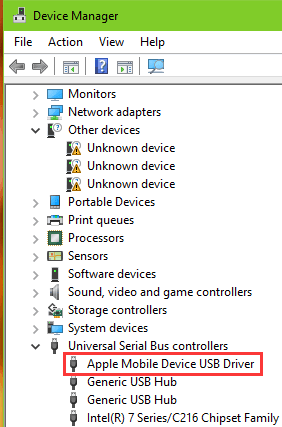
Aug 23, 2017 - The VMware Support article USB 3.0 support for Windows 7 virtual. In the virtual machine, download and install the USB3 drivers from the. Repeat step 4 for each USB controller that is listed under Universal Serial Bus controllers. Restart the computer. After the computer starts, Windows will automatically scan for hardware changes and reinstall all the USB controllers that you uninstalled. Check the USB device to see whether it is working.
Use the links on this page to download the latest version of VirtualBox USB drivers. All drivers available for download have been scanned by antivirus program. When a particular USB device is connected to a virtual machine for the first time, the host detects it as a new device named VMware USB Device and installs the appropriate VMware driver. On Windows XP and Windows Server 2003 host systems, the operating system prompts you to run the Microsoft Windows Found New Hardware wizard. Windows 7: Problem By USB Driver On VMWare Workstation. 09 Aug 2010 #1: nima. Windows 7 Ultimate x64. Device Manager > Universal Serial Bus Controllers Removed a 'Sony Ericsson.??' Host machine not running any other app. Virtual Box 24% Vmware workstation 19% Vmware server 11%. VirtualBox USB - should I install drivers for USB devices on Host as well? The question is whether to install a driver on the Windows 7 host for the scanner. VirtualBox has to load its own driver for a device to be able to 'connect it' to virtual machine. This driver works with any USB device.
USB 1.0 is supported in the version installed from the Ubuntu repositories (from VirtualBox > 4.x).
For USB 2.0 and USB 3.0 we need to install the free (but closed source) VirtualBox Extension Pack (NOT the 'platform packages') from the VirtualBox download page. If you had installed VirtualBox from the repositories you have to make sure to choose the extension pack for the right version of VirtualBox. You can see the version of your installed VirtualBox in the help > About VirtualBox menu. For regular updates and bugfixes it is recommended to install the most recent VirtualBox version from the Oracle repository.
All virtual machines need to be powered off before installing the extension.
2. Become a 'vboxuser'
To be able to get access to an attached USB device, the Ubuntu host user needs to be in the vboxusers group. Add your user to this group by running the following command
and reboot or logout/login.
3. Activate USB support in VirtualBox Manager
Shut down your virtual machine and open USB settings in the VirtualBox Manager. Tick Enable USB Controllerand USB 2.0 (EHCI) Controller or USB 3.0 (xHCI) Controller.
If these settings are greyed out, you need to shut down the virtual machine.
4. Select host USB device for access from the guest
To grant access to USB devices we need to select a device to disable in the host and to enable in the guest (this is a precaution to avoid simultaneous access from host and guest). This can be done from the panel Devices menu or by right mouse click in the bottom panel of the VirtualBox Manager on the USB icon:
Tick the device you need in the guest, untick it if you need it in the host. If you can't see your USB device in that list, it means that VirtualBox cannot access your host USB devices. Make sure your user is added to the vboxusers group and that you restarted your host.
The selected device will immediately be accessible from the guest. A Windows guest may need additional drivers.
- Windows 7 needs an additional driver for USB 3.0 support.
- Windows 10 does not accept an NTFS formatted USB pen drive.
[optional] Use USB filters for permanent access in the guest
By defining USB filters we can define USB devices that will automatically be presented to the guest when booting the guest OS.
Click on the green + symbol on the right to add a known device.
Note, that some devices may lead to a boot failure of the guest. We can not use these devices for filters.
Read more on USB support in the VirtualBox User Manual.
Also see: what are the proper values for usb device in virtual box
Windows Virtual Machine For Mac Universal Serial Bus Controller Driver Download
Install
gnome-system-toolsb/c The old Users and Groups GUI is not available by default on 11.10After the installation finished Open user and groups from launcher
Select your username click on Manage Groups and select vboxusers and click add.
- logout/login to be able to use USB in VirtualBox.
The vboxusers will be in the /etc/group file. You edit it with something like nano .
sudo nano /etc/group
Add your user to the vboxusers line, or create one if necessary.
As Takkat has pointed out, to get full USB device support, you'll need to install the full version of Virtualbox (not the OSE).
The ppa I have for the 'official' virtualbox is here:
I had the same problem. After trying all the other solutions I realised my problem.
I had downloaded virtualbox from the Ubuntu Software Center, which didn't have the latest version of virtualbox, so I had accidently downloaded the wrong version of 'Oracle VM VirtualBox Extension Pack'.
Solution:
- open virtualbox, click help, click about, find your virtualbox version number.
- Goto https://www.virtualbox.org/wiki/Download_Old_Builds_4_3 (replace '4_3' with your version).
- Download the 'Extension Pack' that matches your virtualbox version.
- Install that, and it might ask you if you would like to downgrade, click yes.
Worked for me anyway.
In Ubuntu 16.04 LTS, after the initial install with
I also had to:
Then I could enable USB 2/3 support in the machine settings.
What the virtualbox-ext-pack actually does, is download the required files from http://download.virtualbox.org/virtualbox and prompt you to accept the license before installing.
If you can list your USB devices being root, but not as a regular user (despite being in the group vboxusers), it may be related to a reached limit of monitored files.
You need to increase the maximum number of files your programs are allowed to monitor (inotify). If you have a client that synchronizes your files (dropbox, seafile, etc.), the limit can be reached and the USB devices cannot be listed. It is reported as a bug issue here.
Edit /etc/sysctl.conf and increase the limit to 524288. it can be done as mentioned here, like this:
The USB devices should appear doing (as a user or root):
I had the same problem and fixed it by clicking in the VirtualBox group of my user. You can access it installing gnome-system-tools (it does not come with Ubuntu 12.04 Precise Pangolin), either via the Ubuntu Software Center, Synaptic or by typing in the terminal:
Remember that to paste in the terminal you have to use Ctrl+Shift+V, as opposed to Ctrl+V.
You will probably have to enter your password to allow the installation and add a Y (as in yes) to finish installing the packages.
Then you head to your Dash home and type users. You will see two applications. The good one is Users and Groups.
You then have to click on Advanced settings for your user and enter your password.
Now you will be shown a window with three tabs. Click on User Privileges. Find the line that says Use Virtualbox virtualization solution and then OK.
You may be asked to enter your password again. Then click on Close and log-out and log-in again.
When you start VirtualBox, you should see a whole bunch of new USB devices.
Good luck!
My solution was the following:
Windows Virtual Machine For Mac Universal Serial Bus Controller Driver Windows 7
- Power off virtual machine
- Download the right extension pack
- Install extension pack
- Start virtual machine, put in Virtualbox guest additions and install them. If already installed, repeat the installation
- Shut down virtual machine
- Go to Settings>USB as shown in the images above and enable USB
- Boot virtual machine
If not working, restart your whole host system and try again. Worked fine for me.Watch out: At the first boot of the guest system after installing the guest additions, you will see all usb devices to choose, but it can take up to 10 minutes until the Windows guest activates them after you checked them. Just wait patiently.
For me on Kubuntu 16.04 (with virtualbox 5.0.24-dfsg-0ubuntu1.16.04.1 installed via apt) I had used VirtualBox before with USB passthrough working. However, I was no longer part of the virtualbox group (checked with cat /etc/group grep vboxusers) and so used kdesudo kuser to add myself (can be done with sudo usermod -a -G virtualbox $USER too).
I then needed to logout and back in again to use the new group listings and authorise my access.
Now when doing VboxManage list usbhost it returns the usb devices instead of just 'none'; also in the settings on VirtualBox I can choose connected USB devices to passthrough to the virtual OS. Yay!

protected by Community♦Dec 31 '15 at 8:31
Thank you for your interest in this question. Because it has attracted low-quality or spam answers that had to be removed, posting an answer now requires 10 reputation on this site (the association bonus does not count).
Would you like to answer one of these unanswered questions instead?
Not the answer you're looking for? Browse other questions tagged usbvirtualboxvirtualizationusb-drive or ask your own question.
USB controllers are available to add to virtual machines to support USB passthrough from an ESXi host or client computer to the virtual machine.
You can add two USB controllers to a virtual machine. The xHCI controller, available for Linux guest operating systems only, supports USB 3.0 superspeed, 2.0, and 1.1 devices. The EHCI+UHCI controller supports USB 2.0 and 1.1 devices.
The conditions for adding a controller vary, depending on the device version, the type of passthrough (host or client computer), and the guest operating system.
You can install these PlayStation®2 format software titles in the system storage of the PS3™. You can download [PS2 System Data] from (PlayStation®Store). (PS2™ System Data is saved in [Game Data Utility] under [Game].) Insert the disc for the PlayStation®2 format software that is compatible with hard disk installation, and then follow the on-screen instructions to create a game partition on the PS3™ system's hard disk and install the PlayStation®2 format software in it. You can install these PlayStation®2 format software titles on your PS3™ system's hard disk. You can download [PS2 System Data] from (PlayStation®Store). 
Supported USB Device Version | Supported for Passthrough from Client Computer to VM | ||
|---|---|---|---|
EHCI+UHCI | 2.0 and 1.1 | Yes | Yes |
xHCI | 3.0, 2.0, and 1.1 | Yes (USB 2.0 and 1.1 devices only) | Yes (Linux guests only) |
Drivers are not available for the xHCI controller on Windows guest operating systems.
For Mac OS X systems, the EHCI+UHCI controller is enabled by default and is required for USB mouse and keyboard access.
For virtual machines with Linux guests, you can add one or both controllers, but 3.0 superspeed devices are not supported for passthrough from an ESXi host to a virtual machine. You cannot add two controllers of the same type.
Windows Virtual Machine For Mac Universal Serial Bus Controller Drivers
For USB passthrough from an ESXi host to a virtual machine, the USB arbitrator can monitor a maximum of 15 USB controllers. If your system includes controllers that exceed the 15 controller limit and you connect USB devices to them, the devices are not available to the virtual machine.
Windows Virtual Machine For Mac Universal Serial Bus Controller Driver Download
■ | Client computers must have USB controller hardware and modules that support USB 3.0, 2.0, and 1.1 devices present. |
To use the xHCI controller on a Linux guest, ensure that the Linux kernel version is 2.6.35 or later. | |
■ | Verify that the virtual machine is powered on. |
Required Privilege (ESXi host passthrough): Virtual Machine.Configuration.Add or Remove Device |
Windows Virtual Machine For Mac Universal Serial Bus Controller Driver Windows 7
2 | Click the Hardware tab and click Add. |
Select the type of USB Controller to add and click Next. | |
4 | Review the device information and click Next. |
Click Finish. New USB Controller (adding) appears in the hardware list as Present. | |
6 | Click OK to save your changes and close the dialog box. |
Windows Virtual Machine For Mac Universal Serial Bus Controller Driver Free
When you reopen the Properties Editor, the xHCI controller appears on the Hardware tab as USB xHCI controller. The EHCI+UHCI controller appears as USB controller.
Windows Virtual Machine For Mac Universal Serial Bus Controller Driver Windows 10
Add one or more USB devices to the virtual machine.